

our
Initiatives
education
Democratic resilience depends on knowledge, education, and civic engagement for everybody.

2M
As it stands: Over 2 million people are incarcerated in the U.S
10,000
10,000 people are released from state and federal prisons each week
650,000
650,000 people return to their communities annually
Lack of access to education, job training, and reentry resources leaves many people insufficiently supported after incarceration, diminishing civic participation, eroding economic stability, and perpetuating cycles of structural disadvantage. These barriers extend beyond individual opportunity, weakening public safety and depleting the social capital necessary for collective resilience.

Residential segregation, disproportionate levels of gun violence, concentrated and intergenerational poverty
Disrupted access to stable education, experiences of trauma and post-traumatic stress, structural barriers to healthy psychological development, limited mentorship, and limited pathways to social mobility and self-determination
Adverse physical and mental health outcomes, including elevated rates of infant mortality, heart disease, hypertension, diabetes, and exposure to environmental toxins—especially lead
Communities with high incarceration rates also face:
Education as a Cornerstone of Reentry and Civic Reintegration:
Elevated dropout rates in middle and high school are strongly correlated with future incarceration, more so than race or any other demographic indicator
Limited access to quality education is associated with diminished reentry success and weakened civic engagement
Expanding educational access is among the most empirically supported strategies for reducing recidivism and promoting long-term public safety

Communities without pathways to reintegration face heightened risks of poverty, marginalization, and harm, conditions that erode institutional legitimacy and compromise the vitality of democratic life. Through expanding educational access, advocating on behalf of individuals and communities who have faced institutional and systemic harm, reforming the system based on empirical evidence and common sense strategies, and partnering with communities most impacted by the criminal system, the Justice for Everybody Movement is fortifying the foundations of democratic life and fostering more stable, resilient communities.
Inside Knowledge
Inside Knowledge is a bold and necessary intervention in the landscape of carceral education and civic engagement. It brings the rigor of scholarship into dialogue with the moral clarity of lived experience, reaching those most directly impacted by the carceral state. Delivered through Edovo—the leading digital education platform in the U.S. prison system—the curriculum provides incarcerated and formerly incarcerated individuals with access to a wide-ranging body of multimedia content that confronts the most urgent questions of justice, accountability, and democratic possibility.
Spanning lectures, conversations, symposia, podcasts, and artistic works, Inside Knowledge is about the transmission of information, the cultivation of intellectual empowerment, and the deepening of historical understanding. It invites incarcerated learners to imagine themselves not as passive subjects of punitive systems but as thinkers, critics, and architects of alternative futures. With content rooted in area studies, community organizing, self-help traditions, and academic inquiry of the highest order, the project advances a democratic pedagogy forged in struggle. In convening this archive and extending its reach behind prison walls, J4EM makes a clear statement: that education, pursued in solidarity and with seriousness of purpose, can be a form of resistance, a practice of repair, and a source of democratic resilience.
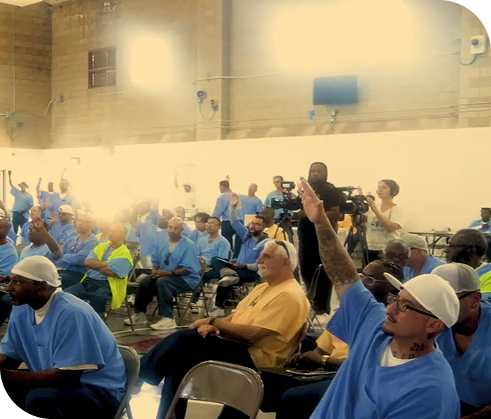
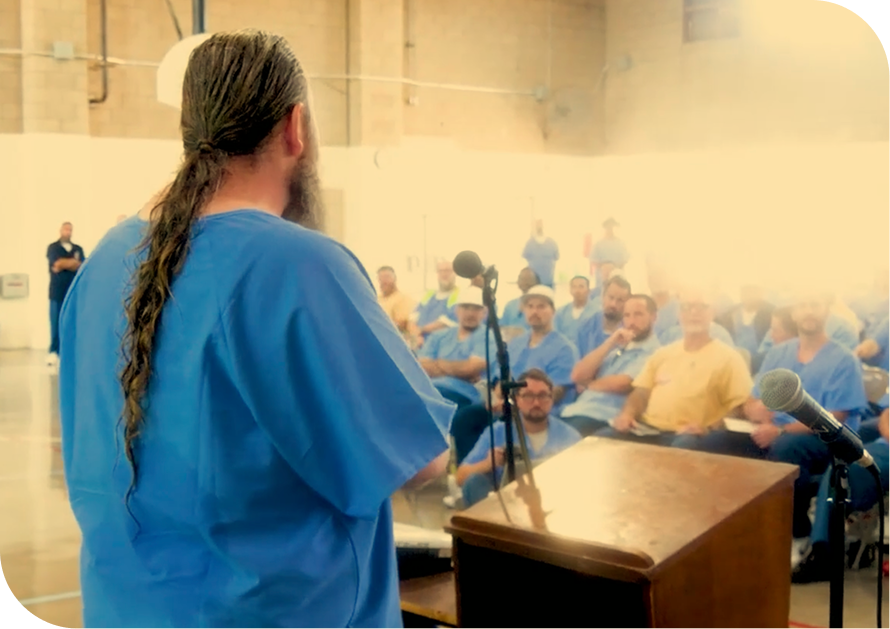
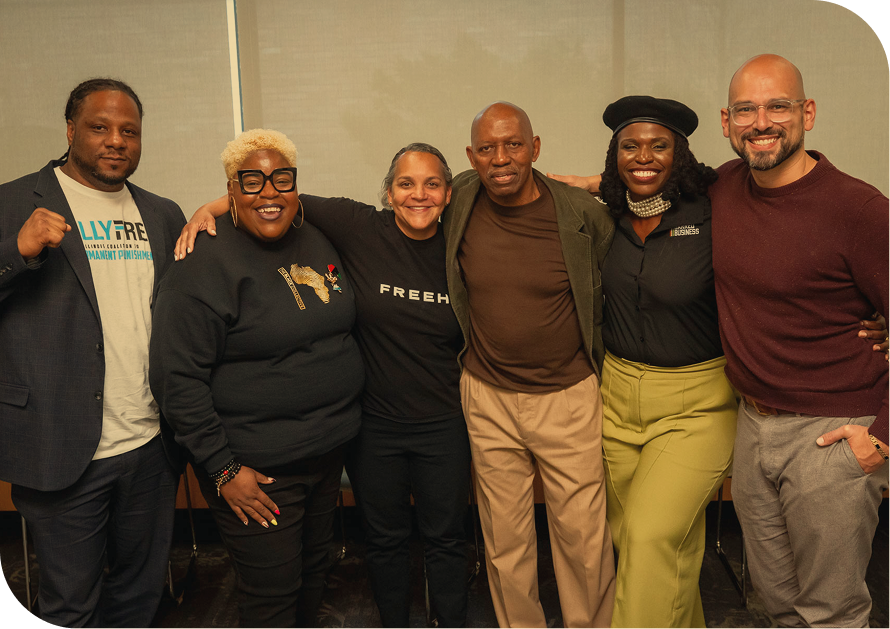
Recently, at Valley State Prison in Chowchilla, California, we witnessed firsthand the importance of widening access to education, civic learning, and creative expression within carceral settings.
Watch our collaborative mini-documentary with CSJG.
By opening pathways for voice, dialogue, and creation, our programming fosters intellectual diversity, strengthens the fabric of public safety, and advances the prospects for fuller democratic participation. Read more about the event in the All of Us Or None newsletter.

OTHER INITIATIVES:
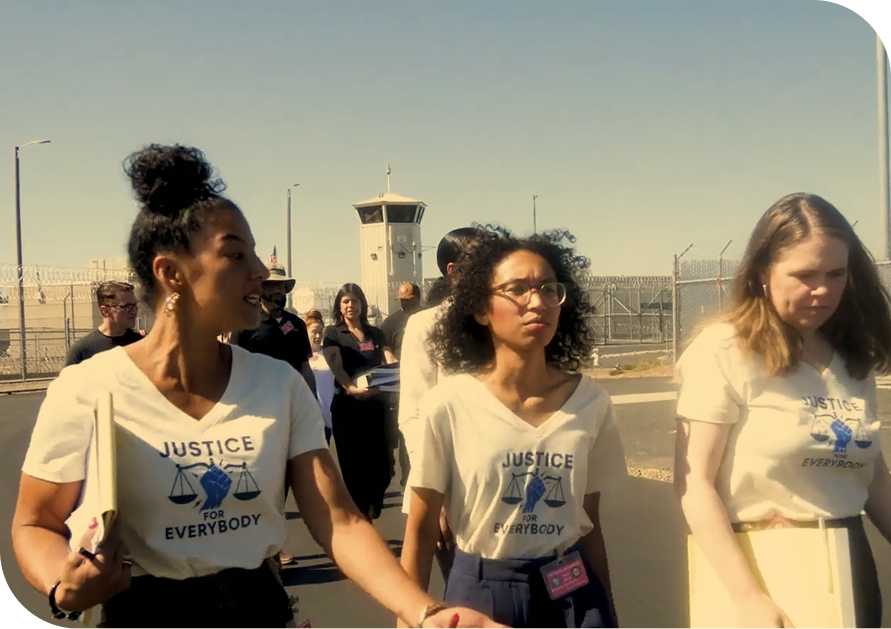
ADVOCACY
Reconceptualizing legal strategies as a means of structural repair and restoration, ensuring outcomes that are fair and effective.
REFORM
Advancing evidence-based approaches that translate into durable institutional and policy change, improving the equity and accountability of legal systems.
Partnerships
Collaborating with key stakeholders and communities to motivate, inspire, and embolden participation in confronting urgent, often intractable challenges.